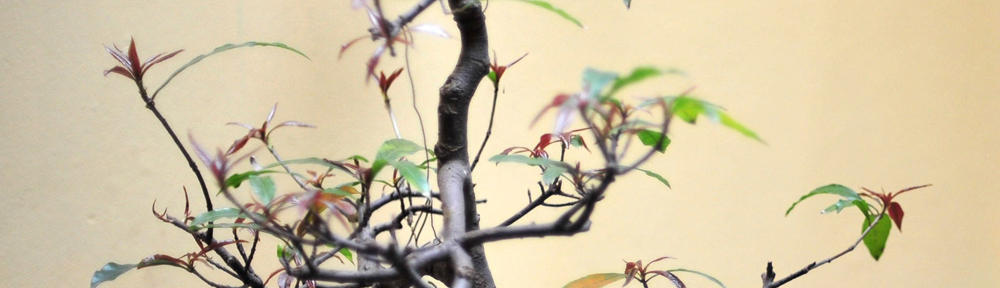
Almug tree

A kind of tree or wood, which Hiram brought from Ophir for the use of Solomon in making pillars for the temple and his own house, and also musical instruments, 1Ki 10:11; 2Ch 2:8. The rabbins call it coral; but it could not be this. It was more probably the tree, which furnishes what is now commonly called Brazil wood, which is also a native of the East Indies, Siam, the Molucca islands, and Japan, and has several species. Its wood is very durable, and is used in fine cabinet work. It yields also a dye of a beautiful red color, for which it is much used. Its resemblance in color to coral may have given occasion for the name almug, which in rabbinic still signifies coral; and thus the meaning of the name would be coral-wood.

[Amtrac]


(1 Kings 10:11, 12) = algum (2 Chr. 2:8; 9:10, 11), in the Hebrew occurring only in the plural almuggim (indicating that the wood was brought in planks), the name of a wood brought from Ophir to be used in the building of the temple, and for other purposes. Some suppose it to have been the white sandal-wood of India, the Santalum album of botanists, a native of the mountainous parts of the Malabar coasts. It is a fragrant wood, and is used in China for incense in idol-worship. Others, with some probability, think that it was the Indian red sandal-wood, the pterocarpus santalinus, a heavy, fine-grained wood, the Sanscrit name of which is valguka. It is found on the Coromandel coast and in Ceylon.

[Easton]


al’-gum, (‘algummim (2Chr 2:8; 2Chr 9:10 f); (‘almuggim, 1Ki 10:11 f)): It is generally supposed that these two names refer to one kind of tree, the consonants being transposed as is not uncommon in Semitic words. Solomon sent to Hiram, king of Tyre, saying, “Send me also cedar-trees, fir-trees, and algum-trees, out of Lebanon” (2Ch 2:8). In 1Ki 10:11 it is said that the navy of Hiram “that brought gold from Ophir, brought in from Ophir great plenty of almug-trees and precious stones.” In the parallel passage in 2Ch 9:10 it is said that “algum-trees and precious stones” were brought. From this wood “the king made …. pillars for the house of Yahweh, and for the king’s house, harps also and psalteries for the singers: there came no such almug-trees, nor were seen, unto this day” (1Ki 10:12). The wood was evidently very precious and apparently came from East Asia–unless we suppose from 2Ch 2:8 that it actually grew on Lebanon, which is highly improbable; it was evidently a fine, close grained wood, suitable for carving. Tradition says that this was the famous sandal wood, which was in ancient times put to similar uses in India and was all through the ages highly prized for its color, fragrance, durability and texture. It is the wood of a tree, Pterocar pussantalinus (N.D. Santalaceae), which grows to a height of 25 to 30 feet; it is a native of the mountains of Malabar.

E. W. G. Masterman

[ISBE]


Algum Trees, Almug Trees.

By comparing 1 Kings 10:11 with 2 Chr. 9:10, 11, it is clear that the two names refer to the same tree; it came from the same place, Ophir, and was used for the same purposes, namely, pillars or props, terraces or stairs, harps and psalteries. 2 Chr. 2:8 presents a difficulty, for it seems to say that algum trees came from Lebanon, and the same trees could scarcely be indigenous to places so dissimilar as Lebanon and Ophir. In the last passage the several trees sent by Huram may be named together without meaning that they were all cut from Lebanon. It is supposed that the sandal wood is referred to. Josephus describes this wood as peculiar pine, not like those called pine in his days:to the sight it was like the wood of the fig tree, but whiter and more shining. Ant. viii. 7. 1.

[Morrish]


the former occurring in (2 Chronicles 2:8; 2Chr 9:10; 2Chr 9:11) the latter in (1Kgs 10:11; 1Kgs 10:12) These words are identical. From (1Kgs 10:11; 1Kgs 10:12; 2Chr 9:10; 2Chr 9:11) we learn that the almug was brought in great plenty from Ophir for Solomon’s temple and house, and for the construction of musical instruments. It is probable that this tree is the red sandle wood, which is a native of India and Ceylon. The wood is very heavy, hard and fine grained, and of a beautiful garnet color.

[Smith]

abesta

This is another difficult word to trace down. Apparently it comes from Zoroasterianism, and it is part of the concepts of their holy Scriptures, which they attributed to Abraham, and whom they also thought was Zoroaster. This is one of their three divisions.
–DCox


ABESTA. The name of one of the sacred books of the Persian Magi, which they ascribe to their great founder Zoroaster. The Abesta is a commentary on two others of their religious books, called Zend and Pazend; the three together including the whole system of the Ignicold, or worshippers of fire.

[Buck]


ABESTA, or AVESTA, the name of one of the sacred books of the Persian magi, which they ascribe to their great founder Zoroaster. The “Abesta” is a commentary on two others of their religious books, called “Zend” and “Pazend”; the three together including the whole system of the Ignicolæ, or worshippers of fire.

[Collier’s Encyclopedia]


A well known Persian dictionary, the Burhan-i-gate, says on our subject: “The Avesta, Abesta or Asta is the exegesis oi the book Zend. This is a book of the Magi which Zertusht has composed on the fire-worship;” and further: “Zend is the name of a book which Ibrahim Zertusht has claimed to have come down to him from heaven. Pazeiid is the expounding of the Zend. Again, others believe Zend and Pazend are two works composed by Ibra-
him Zertusht on fire-worship. Mohammedan writers contradict the opinion that the Zend is the original text of the revelation and Avesta is its expounding. They claim the very contrary, viz : that the Zend is the expounding and Avesta the text.”(*) Professor Haug concludes essentially as follows : Avesta, Zend and Pazend are the names of sacred books which legend refers to Zoroaster ; viz : Avesta is the most hoary one originated by Ormazd. Zend is its exegesis and Pazend is a further expounding of that doctrine. According to the Pahaleve translation, Avesta is the denomination principally of older sacred songs, verses, prayers, laws, and statutes now mostly lost. They contained among others also dietary laws.

[books.google.com]

Asp

Asp (see Snake).

Bible occurrence: (Hebrew pethen) Deu 32:33; Job 20:14, 16; Isa 11:8; Rom 3:13.

This was probably the very deadly Egyptian cobra (Naja haje) which the Egyptians worshipped as uraeus. It is small serpent that gives a very poisonous bite which gives a quick death, as if in sleep.

There are three kinds of asps, the Chersea, Chelidonia, and the Ptyas, of which the last is most deadly [Brown]. The venom of an asp kills by causing sleep, thirst, or loss of blood. Immediately after the bite the person loses his sight, the part bitten swells, and a moderate pain is felt in the stomach. It is said that there is no cure except by cutting off the bitten limb immediately.

The peace and security of the Messiah’s kingdom is seen in a child playing on the opening hole to the asp’s home (security in the presence of great danger which has been controlled).

Wicked men are compared to asps because of their subtlety and carnality (lying in the filth of the earth), and because of their gradual murdering of themselves and others with a cruel venom, bitter gall, and the destructive poison of sin. Asps are mute, hearing no sound, and these wicked men like asps, hear not our Saviour.

Source: [DCox]

Continue reading

Cuckoo

Cuckoo.

Cuckoos are insect-eating migratory birds that appear in Israel during the summer. Scholars feel that the Hebrew word was incorrectly rendered cuckow in the KJV. There is no obvious reason why the cuckoo would be considered an unclean bird (Lev. 11:16; Deut. 14:15). The NKJV translates “seagull.”

Source: [Anon-Animals] Continue reading

Wasp

Wasp.

These overgrown relatives of bees are known for their painful sting. Wasps are common throughout the Holy Land. Hornets are a large species of wasp. So savage were these insects when disturbed that Egyptian soldiers used hornets as a symbol of their military might. When the people of Israel were marching toward the Promised Land, God promised He would send hornets before them to drive the Canaanites out of the land (Ex. 23:28). Ancient writers claim that entire tribes were sometimes driven out of a country by wasps or hornets.

Source: [Anon-Animals]

Spider

Spider.

Hundreds of different species of spiders are found in the Holy Land. A spider’s skill at spinning threads into a web is one of nature’s miracles. The fragile web of a spider is used to demonstrate the folly of placing confidence in something other than the stable, dependable God (Job 8:14).

Spiders trap their victims in their webs and dissolve them with pre-digestive juices so they can be eaten. Oil on the spider’s body keeps it from being entangled in its own web.

Source: [Anon-Animals]

Snail

Snail.

These are small, slow-crawling animals with a soft body protected by a coiled shell. They move with wave-like motions of their single foot, secreting a slime as they go to make their travel easier. The psalmist may have had this peculiar motion in mind when he spoke of the snail “which melts away as it goes” (Ps. 58:8).

The snail_ in (Leviticus 11:30) (KJV ) is probably a skink, a type of sand lizard.

Source: [Anon-Animals] Continue reading

Flea

Flea.

Fleas flourished in the sand and dust of the Holy Land. Classified as parasites, these tiny insects attach themselves to a body and suck blood from their host. Fleas have no wings, but they do have strong legs and can jump several inches at one leap. The flea that lives on man is tiny, but it can be very irritating. David described himself as a mere flea being pursued by a king (1 Sam. 24:14; 26:20). He may have seemed insignificant, but he irritated King Saul.

Source: [Anon-Animals]